Gold
Is Gold a Good Investment in 2026? 25 Years of Data
Gold has had two remarkable years. It rose 27.5% in 2024 and 64.4% in 2025, its best calendar year this century, and on January 29, 2026 it closed at a record $5,318.40 an ounce. Then it turned. By October 30, 2026 it had fallen to $3,898.90, a drop of 27% in nine months.
So is gold a good investment in 2026? The honest answer is that it depends on what you want gold to do. This page sets out the evidence: gold's return in every year since 2001, its worst falls and how long they lasted, the case for and against owning it, and who it tends to suit.
The short version: over the 25 years from the end of 2000 to the end of 2025, gold rose from $272 to $4,341 an ounce, a compound return of about 11.7% a year, and it finished higher in 19 of those 25 years. But it pays no income, its price fell by 44% between 2011 and 2015, and it took until 2020 to recover. Gold has worked best as one part of a wider mix, held for many years, not as a bet on the next few months.
This is general information, not financial advice. Whether gold suits you depends on your circumstances; a licensed financial professional who is not paid on the sale can help you decide.
Claim Augusta's Free Gold IRA Kit
Gold spot price
$4,001.10/ troy oz
-0.51% today·-2.59% past year
Last updated
Live Gold Bullion Price Chart
Data sources: Spot price via api.gold-api.com · COMEX futures (GC=F) via Yahoo Finance. Prices are for informational purposes only and may be delayed. Figures on this page were generated . Gold is quoted in US dollars per troy ounce.
- Day range
- $4,005.60 – $4,074.70
- 52-week high
- $5,586.20
- 52-week low
- $3,879.30
- 1-month change
- -4.32%
- 1-year change
- -2.59%
- 5-year change
- +116.55%
Gold's return, year by year
Figures are year-end closing prices of COMEX gold futures, the benchmark U.S. gold price, and the percentage change from the previous year-end.
| Year | Year-end price | Change |
|---|---|---|
| 2001 | $278.70 | +2.5% |
| 2002 | $347.60 | +24.7% |
| 2003 | $415.70 | +19.6% |
| 2004 | $437.50 | +5.2% |
| 2005 | $517.10 | +18.2% |
| 2006 | $635.20 | +22.8% |
| 2007 | $834.90 | +31.4% |
| 2008 | $883.60 | +5.8% |
| 2009 | $1,095.20 | +23.9% |
| 2010 | $1,421.10 | +29.8% |
| 2011 | $1,565.80 | +10.2% |
| 2012 | $1,674.80 | +7.0% |
| 2013 | $1,201.90 | −28.2% |
| 2014 | $1,183.90 | −1.5% |
| 2015 | $1,060.30 | −10.4% |
| 2016 | $1,150.00 | +8.5% |
| 2017 | $1,306.30 | +13.6% |
| 2018 | $1,278.30 | −2.1% |
| 2019 | $1,519.50 | +18.9% |
| 2020 | $1,895.10 | +24.7% |
| 2021 | $1,828.60 | −3.5% |
| 2022 | $1,826.20 | −0.1% |
| 2023 | $2,071.80 | +13.4% |
| 2024 | $2,641.00 | +27.5% |
| 2025 | $4,341.10 | +64.4% |
| 2026 to November 4 | $4,073.00 | −6.2% |
Three things stand out:
- Gold rose in most years. Nineteen of the 25 full years were up. The median year gained 13.4%.
- The gains came in long runs. Gold rose every year from 2001 to 2012, and again from 2023 to 2025.
- The losses also came in runs. 2013 to 2015 cost 37% in three years, and 2021 and 2022 went nowhere.
How far gold can fall, and for how long
The figure that matters most to anyone thinking of buying gold is not its average return but its worst stretch.
- 2011 to 2015. Gold closed at $1,888.70 on August 22, 2011. On December 17, 2015 it closed at $1,050.80, 44% lower. Someone who bought at the 2011 peak did not see that price again until 2020, nine years later.
- 2026. From the record close of $5,318.40 on January 29, 2026 to $3,898.90 on October 30, gold fell 27% in nine months, wiping out most of 2025's gain for anyone who bought near the top.
Falls like these are normal for gold. If a 30% or 40% drop that lasts several years would force you to sell, or keep you awake, gold should be a small part of what you own, or none of it.

The case for gold as an investment
- A long record of holding value. Over 25 years gold has compounded at about 11.7% a year, well ahead of inflation over the period, though not smoothly.
- It moves differently from stocks and bonds. Gold often holds up or rises when other assets fall, which is why it is used to steady a portfolio. In 2008, a year of financial crisis, gold rose 5.8%.
- Nobody's promise. Physical gold is not a loan to a company or a government. Its value does not depend on anyone paying you back.
- Demand in uncertain times. Investors and central banks tend to buy gold when they are worried about inflation, currencies, debt or conflict.
- Easy to sell. Standard coins and bars are recognized and traded worldwide.
The case against gold as an investment
- No income. Gold pays no interest, dividends or rent. Your only return is a rise in price, and money held in gold forgoes the income it could have earned elsewhere.
- Long losing stretches. As the table shows, gold can lose a third or more of its value and stay down for years.
- Costs of ownership. Buying physical gold means paying a dealer's premium, and storing it safely costs money. A gold IRA adds custodian and storage charges.
- Higher tax on gains. The IRS taxes gains on physical gold outside an IRA as gains on collectibles, at a maximum rate of 28%.
- Hard to value. A share has earnings and a bond has interest. Gold's price is whatever buyers will pay, which makes it hard to say when it is cheap or expensive.
Is now a good time to buy gold?
Nobody knows where the gold price will go next, and this page does not try to guess. What the record does show:
- Gold has just fallen from a record. At about $4,100 in November 2026, it is well below January's peak but still far above where it was two years ago.
- Timing gold is hard. Its biggest gains and losses came in runs that were obvious only afterwards.
- Buying in stages reduces timing risk. Many buyers spread purchases over months instead of investing a lump sum at one price.
Our guide to should I buy gold now or wait looks at timing in more detail, and the gold bullion price chart shows the full price history.

Who gold tends to suit
Gold tends to suit people who:
- Want to diversify savings held mostly in stocks, bonds or cash.
- Can hold for many years and ride out long falls without needing to sell.
- Do not need income from this part of their money.
- Value owning something physical that does not depend on a financial institution.
Gold tends not to suit people who:
- Need income or may need the money soon.
- Would sell after a sharp fall.
- Want growth they can measure by earnings or interest, as with shares and bonds.
How much of your savings should be in gold?
There is no figure that fits everyone, and anyone who names one without knowing your circumstances is guessing. Most people who hold gold keep it as a minority of their savings, alongside the investments that produce income and growth. A licensed financial professional who is not paid on the sale can help you settle on a share that suits your age, goals and tolerance for risk.
Ways to invest in gold
- Coins and bars you own outright, kept at home or in a vault.
- A gold IRA, which holds physical gold for your retirement savings, kept at an approved depository.
- Gold funds (ETFs) that hold gold and trade like shares.
- Mining shares, which behave like shares as much as like gold.
Our guide to how to invest in gold compares them on cost, risk and tax, and gold IRA vs physical gold helps you choose between the two physical routes.
Investing in gold through Augusta Precious Metals
If you decide that physical gold belongs in your retirement savings or your own hands, Augusta Precious Metals is our first-ranked company, and it is built for investors who want to understand gold before they buy.
- It teaches before it sells. Augusta explains how a gold IRA works before any sale, and investors with $100,000 or more can have a one-on-one web conference designed by its director of education.
- Its arrangements are published. Its custodian is Equity Trust Company and its depository is the Delaware Depository.
- Its buyback record. Augusta says it has never declined a buyback request since 2012, and that it cannot legally guarantee one, which no dealer can.
- An honest fit. Its minimum is $50,000. If you are starting with less, a few coins from an established dealer or a gold fund may suit you better for now.
Augusta's free Gold IRA kit explains how investing in gold through an IRA works, and requesting it does not open an account. Augusta is a partner of this site: if you contact it through our links, we may be paid. Our Augusta Precious Metals review covers it in full.
Claim Augusta's Free Gold IRA Kit
FAQ
Is gold a good investment in 2026?
It can be, as a long-term part of a wider mix. Gold returned about 11.7% a year over 2001 to 2025, but it fell 27% between January and October 2026 and pays no income. Whether it suits you depends on your goals and how long you can hold.
Is gold a good investment for the long term?
Over the past 25 years, yes: it rose in 19 of 25 years. But it had a 44% fall from 2011 to 2015 and took nine years to recover, so "long term" needs to mean many years.
Does gold beat inflation?
Over long periods it has, including the 25 years shown on this page. Over shorter periods it often has not: gold fell in 2021 and 2022, years of high inflation.
What are the disadvantages of investing in gold?
It pays no income, its price can fall sharply and stay down for years, physical gold costs money to buy and store, and gains are taxed at up to 28% outside an IRA.
Is gold safer than stocks?
Not in the sense of a steadier price; gold has fallen as far as stocks at times. It is different from stocks, which is why people hold both: gold often moves independently and is nobody's promise to pay.
Is it better to invest in gold or silver?
Silver has moved more sharply in both directions. Our guide to whether silver is a good investment and our comparison of gold vs silver set out the differences.
How much gold should I own?
There is no single right amount. Most people who hold gold keep it as a minority share of their savings. A licensed financial professional can help you choose.
The bottom line
Gold has been a good long-term investment over the past quarter century, but only for buyers who could hold through long falls and did not need income. If that describes you, gold can be a sensible part of a wider plan. If a 30% to 40% fall would force you to sell, keep your gold holding small.
Sources
- Gold prices: COMEX gold futures (GC=F) daily closes from Yahoo Finance, August 2000 to November 4, 2026, and the gold spot price from api.gold-api.com, as shown in the chart on this page. Annual changes, the compound return and the falls are calculated from those closes.
- IRS Topic No. 409, Capital gains and losses (the 28% maximum rate on gains from collectibles)
- Augusta Precious Metals facts as checked for our Augusta Precious Metals review on Augusta's website
Claim Augusta's Free Gold IRA Kit
More guides
 Gold
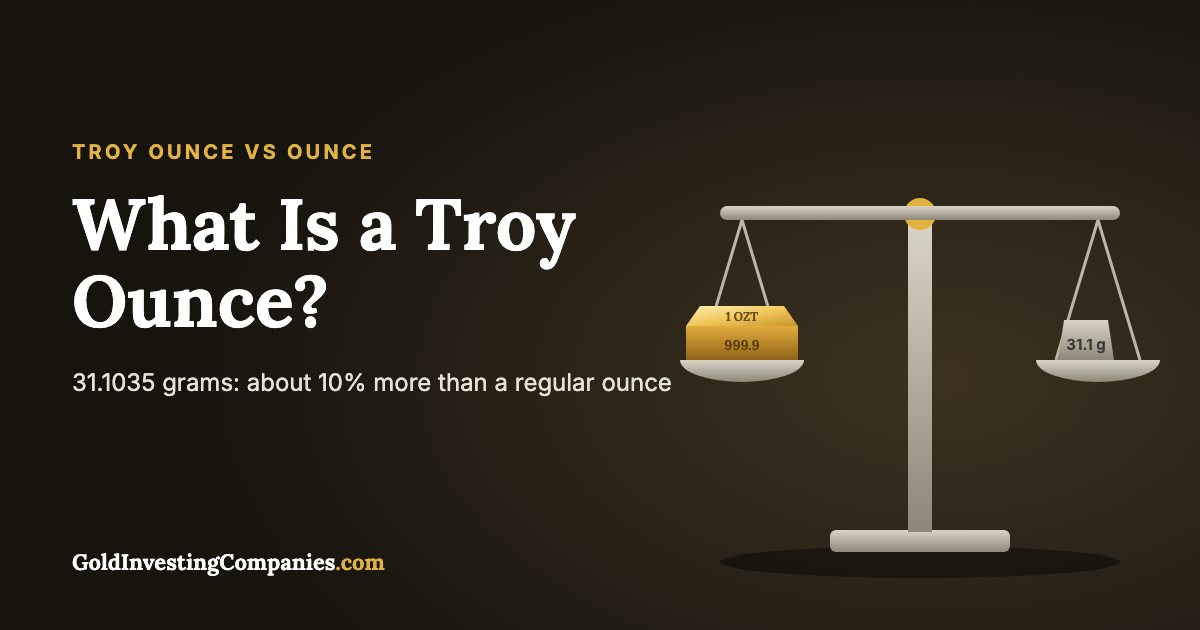
What Is a Troy Ounce? Troy Ounce vs Ounce Explained (2026)
What a troy ounce is, how it compares with a regular ounce, and how to convert troy ounces to grams, pounds and kilograms, with gold's value per unit today. Gold
How to Buy Gold in 2026: Six Ways, Costs and Risks
How to buy gold in 2026: coins and bars, a gold IRA, gold funds, mining shares and futures compared on cost, risk and taxes, with steps to start. Gold
How Much Is a Gold Bar Worth? Live Values by Size
How much a gold bar is worth today, from a 1 gram bar to a 400 oz Good Delivery bar, updated with the gold price, plus what each size weighs and sells for.Looking for a company to buy from? See how Augusta Precious Metals, Goldco and American Hartford Gold compare.
Compare the three companies